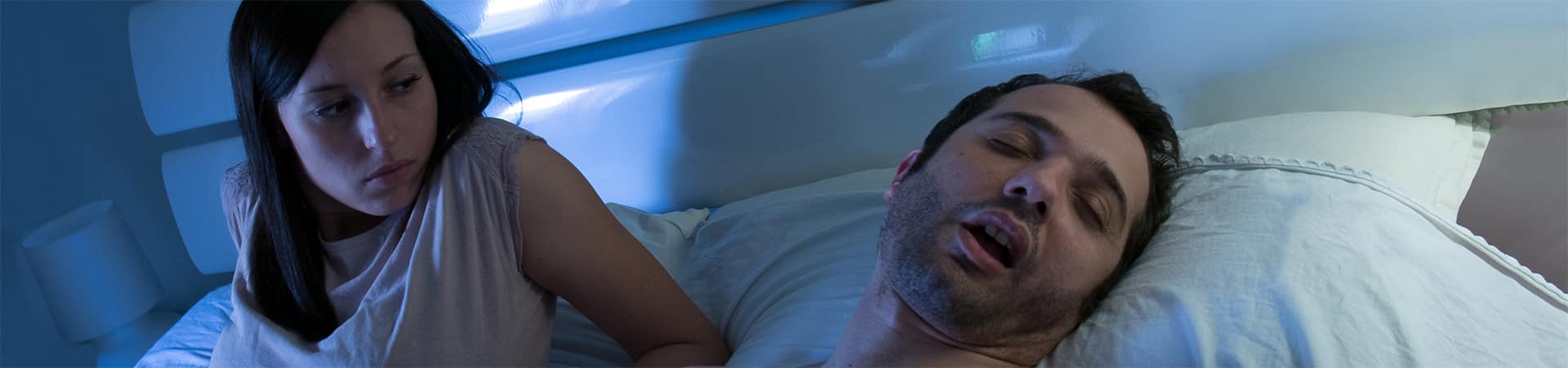
What Is Sleep Apnea?
Sleep apnea is a common sleep disorder that involves repeated breathing interruptions during sleep. These interruptions may occur hundreds of times each night, and may be the result of structural abnormalities or brain malfunctions.
During normal breathing, air passes through the nose, past the flexible structures in the back of the throat, including the soft palate, uvula and tongue. When you're awake, muscles hold this airway open. When you're asleep, these muscles relax and the airway usually stays open. Sleep apnea occurs when the upper airway and airflow are blocked, causing oxygen levels to drop in both the brain and the blood, resulting in shallow breathing or breathing pauses during sleep.
Causes of Sleep Apnea
Sleep apnea occurs as a result of a partial or fully blocked airway passage in the throat. Certain factors may put you at risk for developing sleep apnea, including:
- Enlarged tonsils or adenoids
- Obesity
- Cardiovascular problems
- Smoking
- Family history
- Nasal congestion
- Throat and tongue muscles that are more relaxed than normal
Adults over the age of 60 may be more at risk because the aging process may limit the brain's ability to keep throat muscles stiff during sleep. Heavy use of alcohol or sedatives may also contribute to sleep apnea because these substances may relax the muscles of the throat.
Types of Sleep Apnea
There are different types of sleep apnea that have different causes.
Obstructive Sleep Apnea
Obstructive sleep apnea (OSA) is the most common form of sleep apnea. It occurs when the soft tissue at the back of the throat closes, blocking or obstructing the airway.
Central Sleep Apnea
In patients with central sleep apnea the airway remains open but the brain does not send signals to the muscles involved in breathing. Patients with heart-related conditions may suffer from central sleep apnea.
Mixed Sleep Apnea
Mixed sleep apnea combines aspects of the obstructive and central types of apnea. A common warning sign of mixed sleep apnea is snoring, especially interspersed with gasps or lack of breathing.
Patients who are overweight, have high blood pressure, are older, smoke or have a family history of sleep apnea may have an increased risk of developing obstructive sleep apnea, while those with heart disease or a stroke are at an increased risk for central sleep apnea.
Symptoms of Sleep Apnea
Patients with sleep apnea may wake up with a headache in the morning and experience excessive daytime sleepiness. Additional symptoms may include:
- Loud snoring
- Waking up with a dry mouth or sore throat
- Insomnia
- Abrupt awakenings during the night
- Shortness of breath that awakens you from sleep
Diagnosis of Sleep Apnea
Sleep apnea is diagnosed through a physical examination and a review of symptoms. We may refer you to a sleep specialist who performs various diagnostic tests to confirm a diagnosis of sleep apnea or another sleep disorder. Some evaluations often involve overnight monitoring of breathing and other body functions during sleep. Additional diagnostic tests may include home sleep tests and a nocturnal polysomnography, which monitors heart and lung function, brain activity, breathing patterns, and blood oxygen levels during sleep.
Treatment of Sleep Apnea
Sleep apnea may be treated with lifestyle changes such as losing weight, cutting down on alcohol consumption and quitting smoking. Oral appliances are also commonly used to treat sleep apnea. Other treatment for sleep apnea may include continuous positive airway pressure, or CPAP, which involves wearing a pressurized mask over your nose while you sleep. The mask pumps air through the airway to keep it open.
If conservative treatment is unsuccessful in treating sleep apnea, there are other options available. Individuals who suffer from severe cases of sleep apnea that may lead to serious medical conditions may benefit from surgery. The goal of most surgical procedures is to remove excess tissue from the nose or throat and open upper air passages to facilitate breathing.
Surgical Options
Uvulopalatopharyngoplasty treats obstructive sleep apnea by tightening the tissue in the throat and palate to expand the passageways. It may also include the removal of the tonsils and adenoids.
Maxillomandibular Advancement moves the upper and lower part of the jaw forward to create more space behind the tongue and soft palate and reduce the risk of obstruction during sleep. Breathing is restored as the path for airflow is cleared.
Tracheostomy is often performed after other treatments have failed. It involves inserting a metal or plastic tube into the throat to help you breathe during sleep. The opening remains covered during the day but helps air pass directly in and out of the lungs during sleep. Tracheostomy is reserved for severe, life-threatening cases of sleep apnea.
Thermal Ablation Palatoplasty (TAP) is a group of procedures used to treat snoring and sleep apnea. During these procedures, electric current is used to cut away obstructive tissue in the airway and roof of mouth, or to shrink and stiffen obstructive areas in rear of the mouth and the uvula. Radio frequency ablation is used to emit energy to shrink excess tissue.
Genioglossus and Hyoid Advancement procedures are frequently used to treat sleep apnea. The surgical procedure prevents the collapse of the lower throat by pulling the tongue muscles forward, which opens the obstructed airway.
Septoplasty and Turbinate Surgery reduces resistance to air flow through the nose. It repairs and straightens the nasal septum to improve breathing.